Having worked in the Hong Kong Jockey Club Carer Space Project for the past two years, I have come to realize that caregiver service is not only about providing support, but also about making caregivers visible. In Hong Kong, many carers continue to shoulder immense emotional, physical, and financial responsibilities in silence. Their struggles are often hidden within the private space of the family, and as a result, the wider public may underestimate both the scale of caregiving and its psychological impact. This has led me to reflect on an important question: how can we help more people recognize caregiving as a social issue, rather than merely a personal or family matter?
At the Sau Po Centre on Ageing (CoA), we are reminded that a carer-centric approach, together with public awareness, is essential to building a more carer-friendly community and connecting carers to timely and appropriate services. One key challenge is that public education today cannot rely on traditional forms of knowledge dissemination alone. We are living in an age where information flows rapidly, competes constantly for attention, and is often consumed in brief, emotionally engaging formats. People no longer learn only through reports, lectures, or professional articles. Instead, they absorb knowledge through scrolling, watching, sharing, and reacting. This shift does not mean that psychological science has become less important; rather, it means that the way we communicate psychological science must evolve.
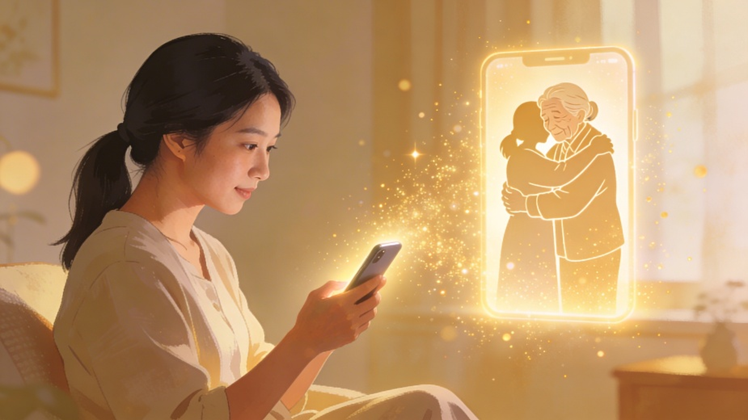
In this context, storytelling has special power. Facts and statistics are essential, but stories help people feel the human meaning behind the data. A caregiver’s lived experience can make abstract concepts such as chronic stress, burnout, resilience, and help‑seeking much more relatable and memorable. At CoA, we see storytelling as a way to bridge the gap between scientific knowledge and public understanding, transforming evidence into something emotionally accessible, socially shareable, and personally relevant, while helping to alleviate caregiver burden and improve overall well‑being.
For this reason, I believe we need to invest much more effort in social media. At CoA, social media should not be seen as a secondary or superficial channel, but as a powerful platform for public mental health education. Through short videos, visual posts, personal narratives, and evidence‑based messages, we can communicate caregiver issues in ways that are engaging, credible, and easy to understand. More importantly, these platforms allow stories to circulate beyond professional circles and enter everyday conversations, just as our in‑home respite services and other community‑based initiatives aim to reach carers where they are—often hidden within the family and the home.
If we want more people to recognize, respect, and support carers, we must meet the public where they are. That means not only producing good knowledge, but also delivering it in forms that can travel, resonate, and stay with people. In today’s world, increasing awareness of caregiving requires not just service, but communication; not just science, but storytelling. Through the work of CoA, we can help make caregivers visible, valued, and better understood in society.
By: Dr. Tom TSOI, Post-doctoral Fellow
Email: tomtsoi@hku.hk