As a linguist working in Sau Po Centre on Ageing, I’m often met with puzzling looks when I introduce myself. The questions usually follow a predictable pattern:
- “So, is it like a speech therapist?” (NOPE!)
- “What does linguistics have to do with ageing?”
It’s understandable. When we think about ageing, we usually picture physical changes or the cognitive changes (“My memory is getting worse!”). These are the visible changes that impact our daily lives. But there is an invisible, incredibly complex “workout” our brains do every single day: Language.
Speaking is actually a high-performance job. It requires a seamless bridge between your physical and cognitive worlds. Your brain has to find the right word, put it in a meaningful order, and then direct your facial muscles and tongue to move in perfect sync to articulate it.
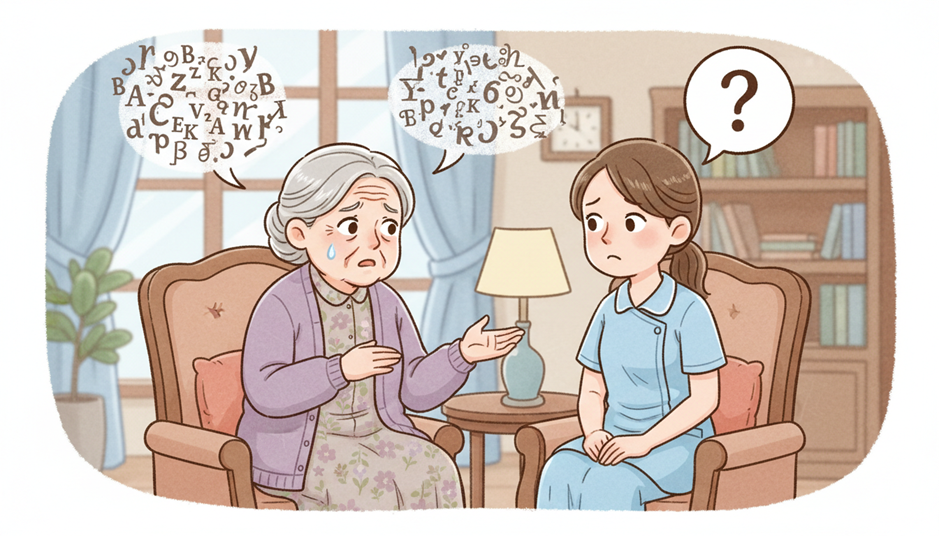
(Photo generated by Nano Banana 2.5.)
Through the JC Stand-by-U project, we met a 100-year-old Japanese-Cantonese bilingual. As her dementia progressed, she experienced what we call “bilingual attrition”—she lost her second language and reverted entirely to her native Japanese. Because her family and caregivers spoke only Cantonese, she was left unable to express her basic needs. This linguistic shift led to profound social isolation and potentially compromised her care.
Her story reminds us that caregiving is about more than supporting ADL and IADL needs. By embracing an interdisciplinary approach, we can understand ageing in a more cohesive sense.
By: Dr. Roza Nga-Yan HUI, Post-doctoral Fellow
Email: rozahui@hku.hk